Concussion Care Isn’t One‑Size‑Fits‑AllUnderstanding the Difference Between Standard Concussion Care and the Carrick Institute Model
Concussion is often described as a “mild” brain injury — but for many people, the symptoms are anything but mild. Headaches, dizziness, brain fog, fatigue, balance problems, light sensitivity, and difficulty concentrating can linger for weeks or even months.
If you’ve been told to “just rest and wait,” you’re not alone. That advice reflects the traditional or standard approach to concussion care, which is still common across Tauranga and the wider Bay of Plenty. However, newer models of care — including the Carrick Institute approach — take a very different path.
This article explains the key differences in a clear, patient‑friendly way.
The Standard Concussion Care Model“Rest, Monitor, and Gradually Return”
Most concussion care in New Zealand follows international guidelines that focus on:
Initial rest (physical and cognitive)
Monitoring symptoms
Gradual return to activity
Referral only if symptoms persist
What This Looks Like in Practice
Advice to rest and avoid screens, exercise, or work
Pain relief for headaches
General reassurance that symptoms will settle
A “wait and see” approach over weeks
Referral to specialists only if recovery stalls
Strengths of This Model
Appropriate for simple, short‑term concussions
Reduces risk of early re‑injury
Easy to apply across large populations
Limitations
Assumes the brain will self‑correct without targeted input
Does not identify why symptoms persist
Treats concussion as a single condition rather than multiple subtypes
Limited objective testing of brain function
Can leave patients feeling stuck, frustrated, or unheard
For many people, symptoms resolve within a few weeks. But for others, recovery plateaus — and that’s where this model often falls short.
The Carrick Institute Model“Assess, Identify, and Actively Rehabilitate”
The Carrick Institute approach views concussion as a functional neurological injury, not just a temporary disruption. Instead of waiting for symptoms to fade, this model asks a different question:
Which brain systems are not working properly — and how do we retrain them?Key Principles
The brain is adaptable and trainable (neuroplasticity)
Concussion affects people differently
Persistent symptoms usually reflect specific neurological dysfunctions
Targeted rehabilitation can speed and improve recovery
How the Carrick Model Is Different
Detailed Functional Brain Assessment
Rather than relying only on symptom checklists, this approach uses objective testing to assess:
Eye movements and visual processing; visual suppression
Balance and postural control
Autonomic function, sleep, affect- how it affects you
Reaction time and coordination
Sensory integration
Cognitive load tolerance
This helps identify which brain networks are underperforming.
Concussion Is Sub‑Typed
Not all concussions are the same. The Carrick model recognises patterns such as:
Vestibular‑dominant concussion
Visual‑motor dysfunction
Cervical‑driven symptoms
Autonomic nervous system imbalance
Cognitive fatigue patterns
Understanding the subtype allows treatment to be specific rather than generic.
Active, Targeted Rehabilitation
Instead of prolonged rest, patients are guided through:
Eye movement and visual tracking exercises
Balance and vestibular retraining
Controlled movement and coordination tasks
Cognitive‑motor integration
Gradual nervous system loading
Everything is dosed carefully to stimulate recovery without overwhelming the brain.
Objective Progress Tracking
Progress is measured using repeatable tests, not just symptom reports. This allows:
Clear markers of improvement
Adjustments to care based on response
Confidence that recovery is moving forward
Earlier Intervention for Persistent Symptoms
Rather than waiting months before escalating care, this model supports early assessment when recovery isn’t progressing as expected.

Side‑by‑Side Comparison
Standard Concussion Care
Carrick Institute Model
Rest‑focused
Active rehabilitation
Symptom‑based
Function‑based
One general pathway
Individualised care
Limited testing
Detailed neurological assessment
Wait‑and‑see
Identify and retrain
Best for short‑term recovery
Designed for persistent or complex cases
Why This Matters for Patients in Tauranga

In the Bay of Plenty, many people with concussion are active — working, parenting, playing sport, or managing busy lives. When symptoms linger, being told to “just give it more time” can feel disempowering.

The Carrick Institute model offers an alternative for those who:
Aren’t improving as expected
Have ongoing dizziness, headaches, or brain fog
Feel limited by persistent symptoms
Want a clearer explanation of what’s happening
The Takeaway

Both models have a place in concussion care.
Standard care works well for straightforward cases that recover quickly.
The Carrick Institute approach is designed for people who need deeper answers and targeted rehabilitation.
If concussion recovery feels stalled, it may not be about time — it may be about finding the right neurological inputs to help the brain heal.
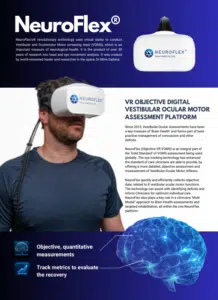
Neuroflex http://www.neuroflex.io is the name of the newest Videonystagmography (VNG) from the creators of the Sports Concussion Assessment Tool. This equipment is used to measure particular sets of eye movements that are known to be affected with Concussions. VNG is the gold standard in the assessing of eye movements. But we can also interpret more, in this clip Anti Saccades there are eye movements that shouldn’t be there. The obvious ones are the little catchup jumps, but you can’t see their convergence failures. This is what makes VNG the best tool for testing and observing eye movements.
For Assessment and Rehabilitation of Concussions, Balance Disorders, BPPV, and Vestibular Complaints
Neuroflex https://neuroflex.io is used to evaluate and diagnose balance disorders and concussions. It focuses on assessing the vestibular system, eye movements, and head movement control. These systems are vital for maintaining balance, when you are active, playing sports, even walking and exercising. Endorsed by the New Zealand Rugby Union, Australian NRL, and the Australian and English Rugby Unions, Neuroflex represents cutting-edge technology in this field.
Neuroflex software and hardware equipment includes:
FOVE goggles: are equipped with infrared cameras that track and record eye movements in real-time.
FOVE Goggles: Feature a gyroscope to track head movements, allowing comparison with eye movements.
Neuroflex Program: Provides visual and positional stimuli for eye movements and responses from the vestibular system.
How It Works:
Patient Preparation: The patient wears infrared video goggles to record eye movements under various conditions.
Test Procedures:
Oculomotor Testing: Assesses the patient’s ability to follow visual targets, revealing potential central nervous system issues.
Positional Testing: Evaluates eye movements in different head positions to identify issues like benign paroxysmal positional vertigo (BPPV).
Report Generation: A comprehensive report is generated, highlighting findings that assist healthcare providers in diagnosing and managing concussions and balance disorders.
Benefits:
Non-Invasive: The test is safe and comfortable for patients.
Accurate Diagnosis: Provides precise data on vestibular and neurological function, aiding in accurate diagnosis and treatment planning.
Early Detection: Helps in the early detection of concussions and other balance disorders, which is crucial for effective management and recovery.
Baseline and follow up assessments
Applications:
Concussion Management: Widely used in sports medicine and neurology to assess athletes and patients with suspected concussions.
Balance Disorders: Helps to diagnose conditions like vertigo, Meniere’s disease, and other Balance (vestibular) disorders.
Rehabilitation: The program includes games that assist in training eye movements and balance functions, as well as monitoring the progress of patients undergoing rehabilitation for balance (vestibular) disorders.
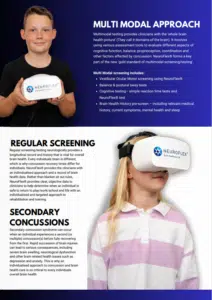
Baseline Testing: https://neuroflex.io/multimodal-testing/ Is very important to establish and then be able to measure against if you have other suspected concussions.
Neuroflex is a valuable tool for diagnosing and managing concussions and balance disorders, with a blend of advanced technology and precise diagnostics. The Lakes Chiropractic is the only location in the Bay of Plenty, Tauranga, and Waikato areas to provide this state-of-the-art equipment.